By the end of this lesson you’ll be able to explain how a tokenized money fund works, who is allowed to hold one and how they get out, and where the US, EU and UK rules on tokenized securities stood on 6 November 2026.

Two ways into US government debt
Franklin Templeton’s money fund sets a $20 minimum for US investors. BlackRock’s BUIDL sets a $5 million minimum and admits only the wealthiest class of investor under US law.
Both own short-dated US government debt and record their shares as tokens on public blockchains.
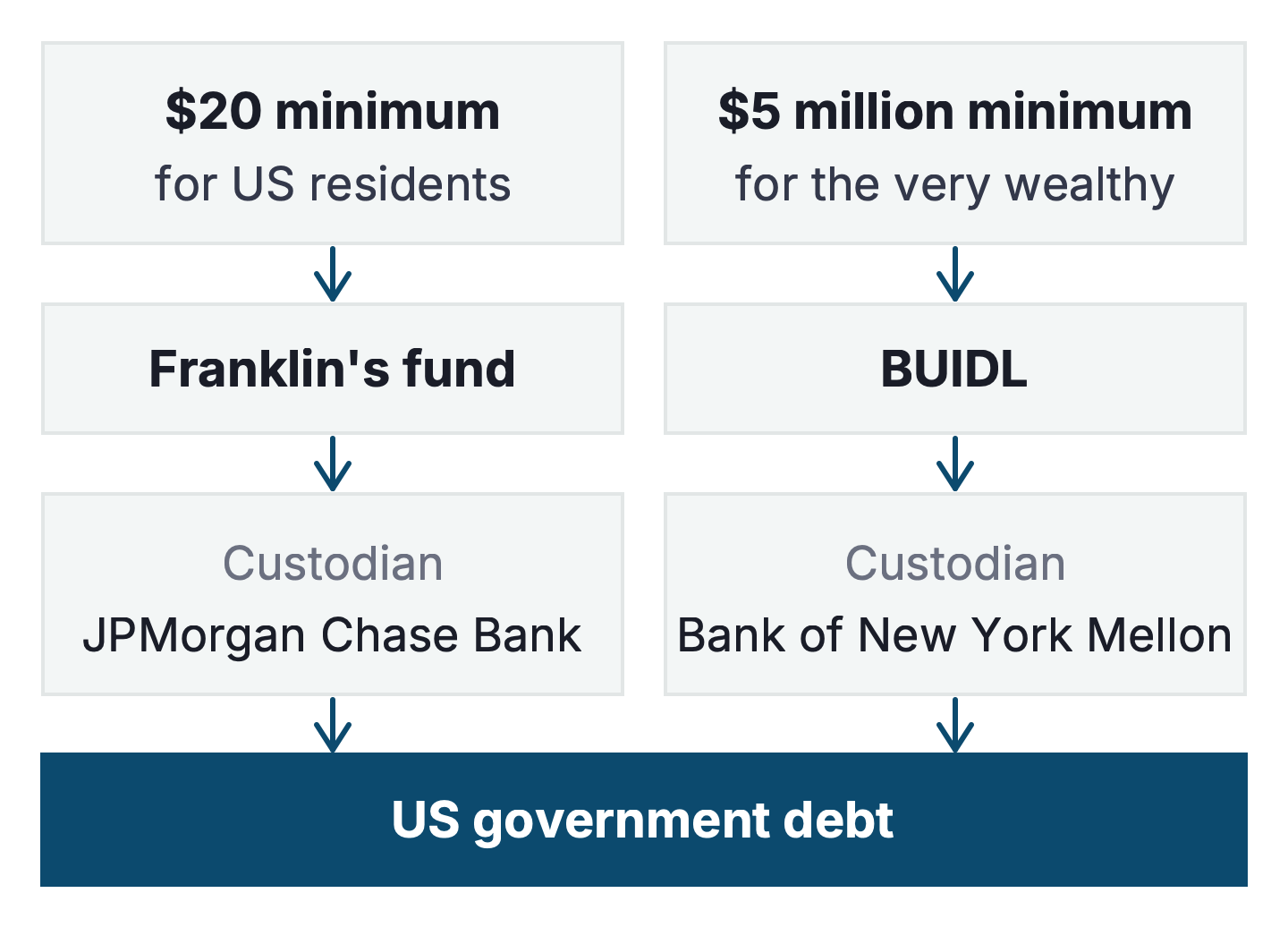
Both ways lead to a custodian holding US government debt. Each fund sets who may come in, and many readers qualify for neither.
Continue with The Crossover Pro
The rest of this story, plus two paid editions a week. $24.99 a month, or $249 a year. Already a member? Sign in above.
Subscribe to Pro