After this lesson you’ll be able to pick the mix of the three ways that fits you, and set up the records that the tax rules now assume you have.

Exchange, fund and wallet, side by side
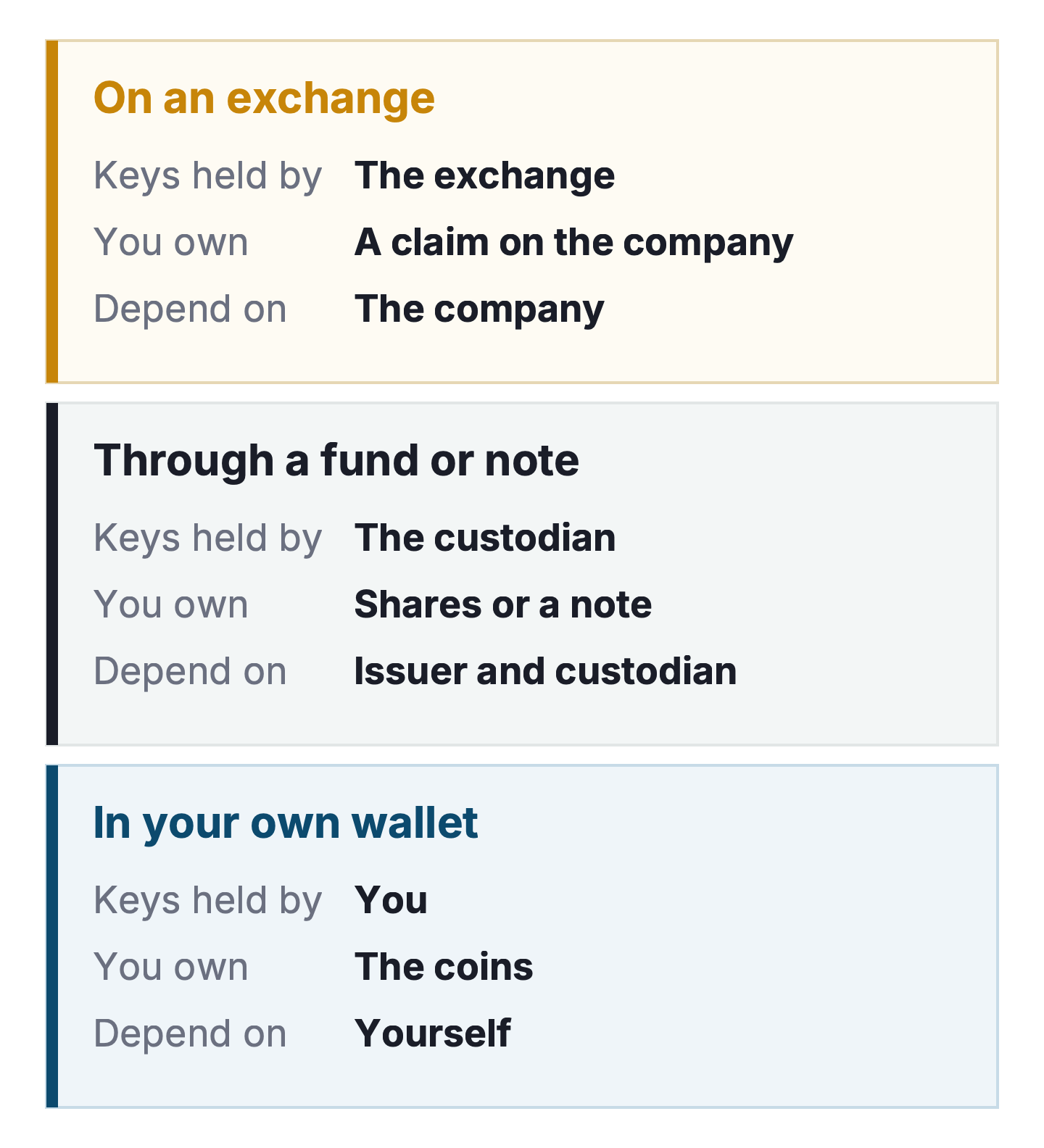
On an exchange you depend on the company staying solvent and honest, even where EU rules keep the coins apart from its own.
On an exchange
What can go wrong
The company fails or is a fraud; a hack; a frozen account
What it costs
The spread, a trading fee, a card fee, a withdrawal fee
What protects you
Conduct rules for authorized firms; in the EU, customers’ coins held apart from the firm’s own; no compensation scheme
Where the records come from
The exchange’s statements, plus your own
Through a fund or note
What can go wrong
The issuer or custodian fails; the shares drift from the coin’s value
What it costs
An annual fee, a broker commission, the spread
What protects you
Securities rules; your broker’s protections may not reach the coins
Where the records come from
Your broker’s statements
In your own wallet
What can go wrong
A lost recovery phrase; a wrong address; a scam; theft
What it costs
A hardware wallet, and network fees when you move coins
What protects you
Your own habits and backups
Where the records come from
Your own notes, from the first transfer