You’ll be able to recognize the slow scam from its first message to its last, know the one tell that says the money is already gone, and check a firm on a regulator’s register before anything moves.

How the slow scam runs
The FBI calls it cryptocurrency investment fraud. It’s run mostly by organized groups in Southeast Asia, many of them staffed by trafficked people forced to work the chats. It costs more than every other crypto crime put together: $7.2 billion reported in the US alone in 2025.
It usually runs in these stages.
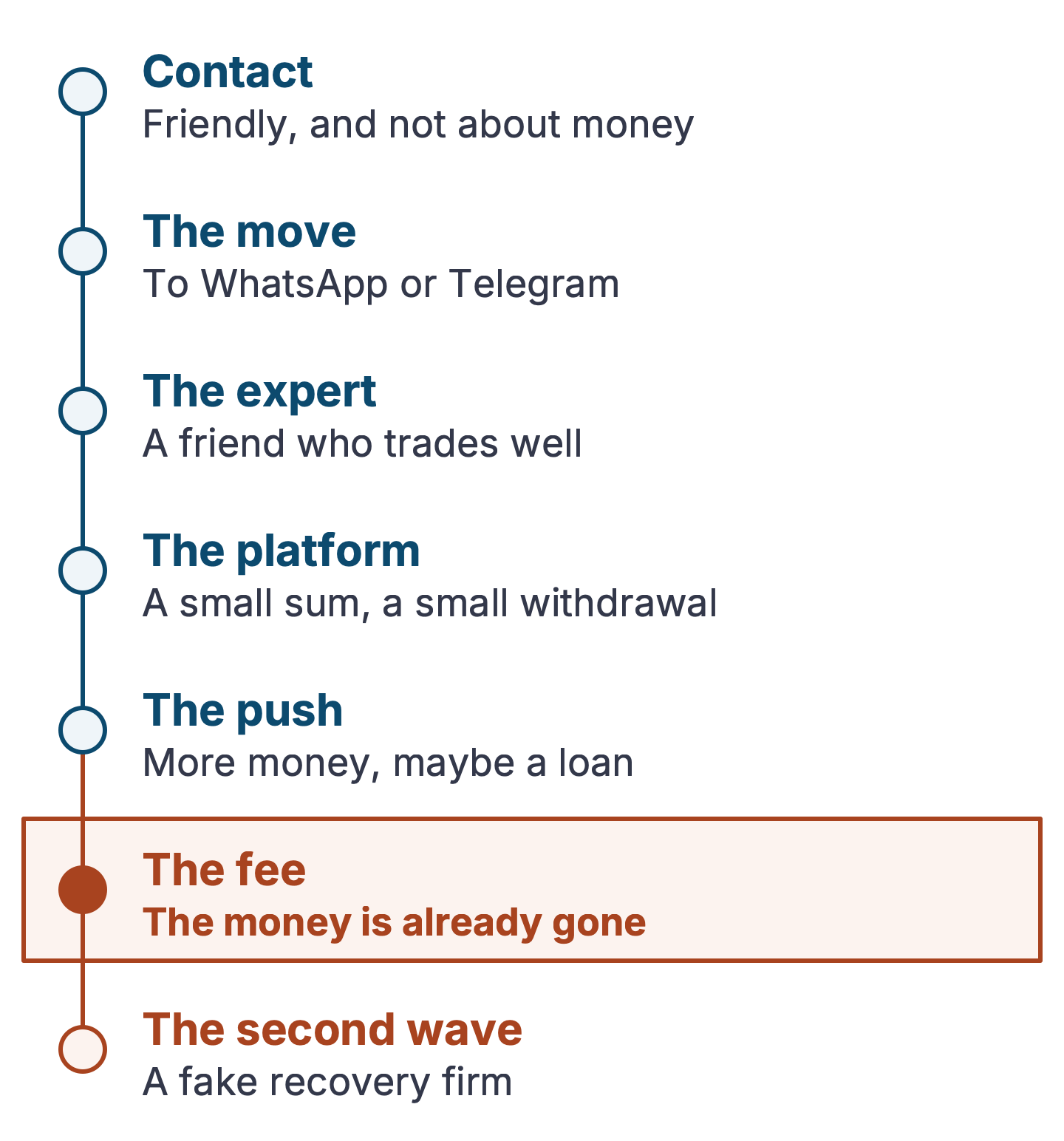
Contact: A text to a “wrong number”, a message on social media, an ad, a dating app. Friendly, patient, and not about money.
The move: Within days the conversation moves to WhatsApp or Telegram, away from any platform that could flag it.
The expert: Your new friend, or a “mentor” they introduce, trades crypto and does well. A group chat shows other members’ results.
The platform: You’re sent to a trading site or app. You put in a small sum. The balance grows on screen. You withdraw a little, and it arrives.
The push: You put in more. A loan is suggested. The balance keeps growing.
The fee: When you try to withdraw real money, the platform asks for “tax”, a “verification fee” or an “anti-money-laundering deposit” first. Then another. Then it goes quiet.
The second wave: Months later a “law firm” or “recovery service” contacts you about getting it back. Lesson 5 covers recovery scams.
Nothing on the platform was real. The balance was a number in a web page the scammers controlled, and the small withdrawal that “arrived” was your own money coming back to buy your trust.