By the end of this lesson you’ll be able to tell the three kinds of bridge apart, say what you actually hold after each one, and explain why DeFi’s biggest thefts came from bridges.

Why a bridge exists at all
Blockchains don’t talk to each other. A token exists only in its own chain’s records, so it can’t cross by itself. A bridge is the mechanism that makes a token usable on a second chain, and every bridge does it by one of three methods.
Lock and mint, burn and mint, or swap
ethereum.org lists them. It calls the third atomic swaps, and the bridges built on them liquidity networks.
Lock and mint
What happens
“Lock assets on the source chain and mint assets on the destination chain.”
Burn and mint
What happens
“Burn assets on the source chain and mint assets on the destination chain.”
Liquidity network
What happens
“Swap assets on the source chain for assets on the destination chain with another party.”
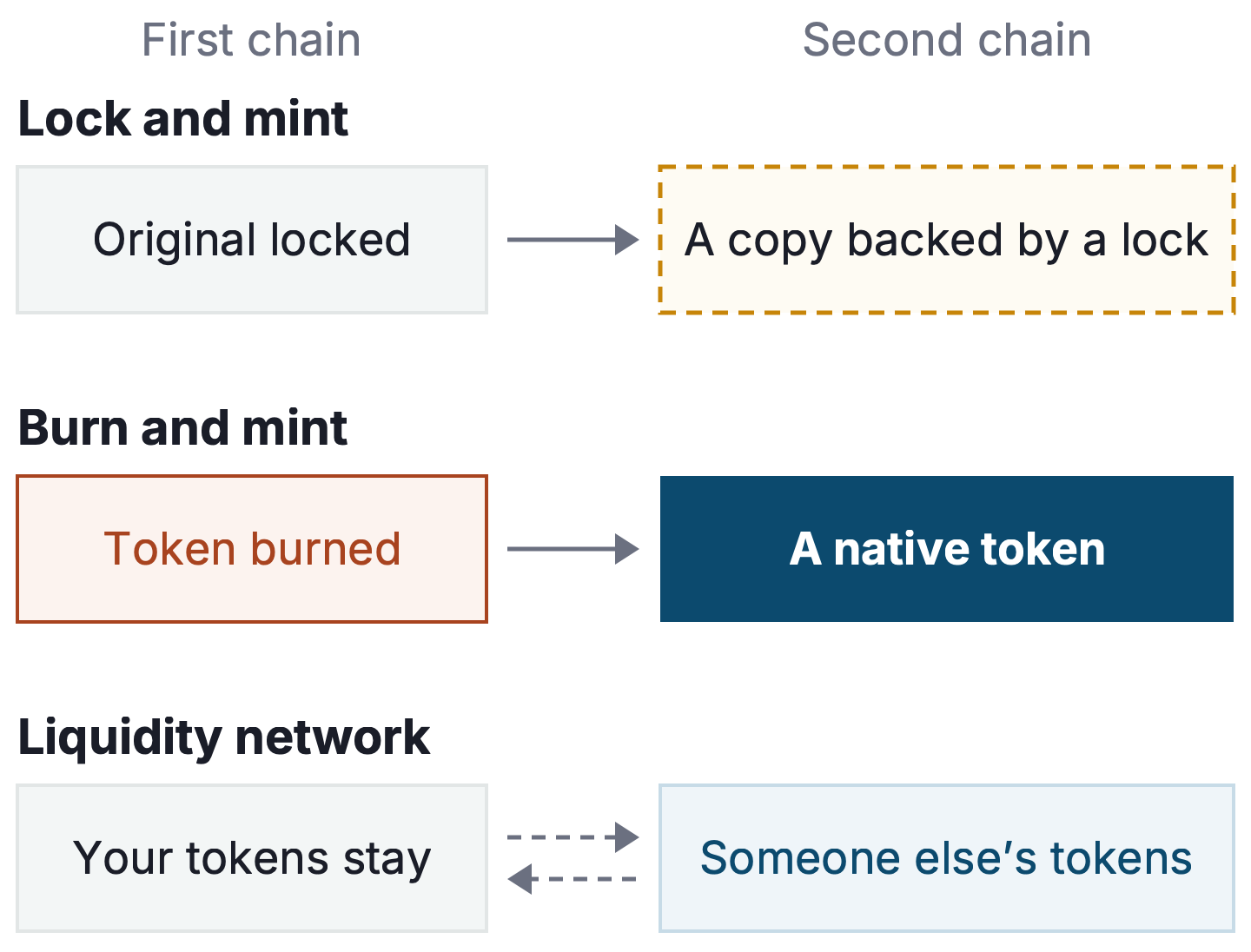
What sits on the far side.
Continue with The Crossover Pro
The rest of this story, plus two paid editions a week. $24.99 a month, or $249 a year. Already a member? Sign in above.
Subscribe to Pro