By the end of this lesson you’ll be able to say why a chain that does more per second is paying for it somewhere, place rollups, sidechains, modular chains and single heavy chains on that map, and say what “Web3” meant in 2021 and what the word is worth now.

Where the cost goes
ethereum.org states the scaling goal as more speed and throughput “without sacrificing decentralization or security,” and the catch is that the three pull against each other. Bigger blocks and faster slots mean more data for every node to check, so fewer people can run one, so the count of independent checkers falls. Fewer checkers means more trust in the ones left.
Every design below is a different answer to the same question: where do you put the cost?
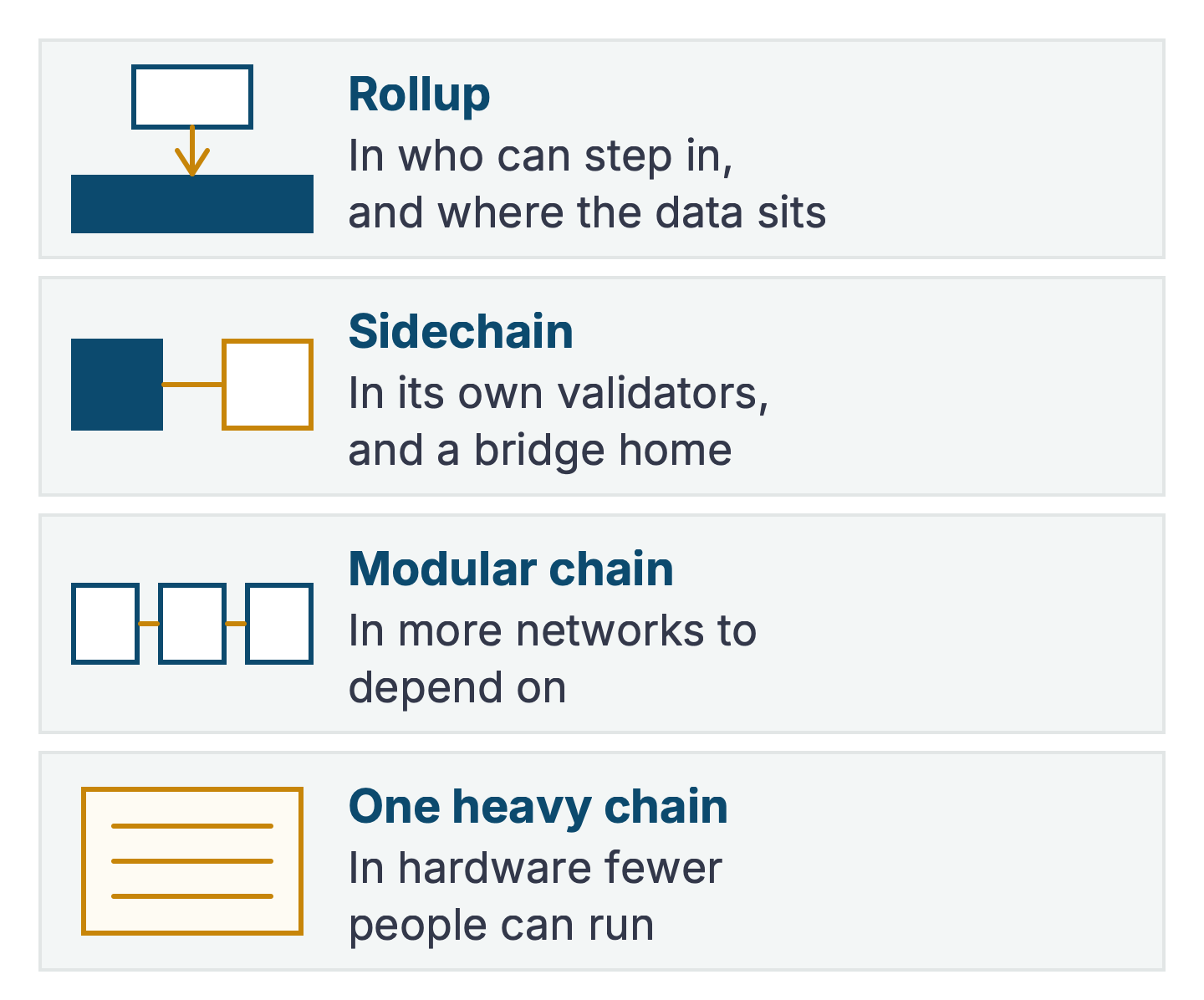
Four designs, and where each puts the cost, marked in amber.
Continue with The Crossover Pro
The rest of this story, plus two paid editions a week. $24.99 a month, or $249 a year. Already a member? Sign in above.
Subscribe to Pro