By the end of this lesson you’ll be able to explain where a layer 2 transaction actually lives, why it costs a fraction of a cent, who could still freeze or take your money on a given network, and how to check that before you bridge.

Where a layer 2 transaction lives
Ethereum’s own blocks aim at about 30 million gas of work every twelve seconds and can hold up to 60 million, and demand for that space is what sets the base fee from lesson 2. Layer 2 networks, mostly rollups, take the work elsewhere.
ethereum.org on optimistic rollups: they “execute transactions outside of Ethereum, but post transaction data to Mainnet.” Your swap runs on the rollup’s own computers; the record of it is posted back to Ethereum in batches.
That posting is the point. Because the data is on Ethereum, anyone can rebuild the rollup’s state from it, and the rollup’s contracts on Ethereum hold the deposits.
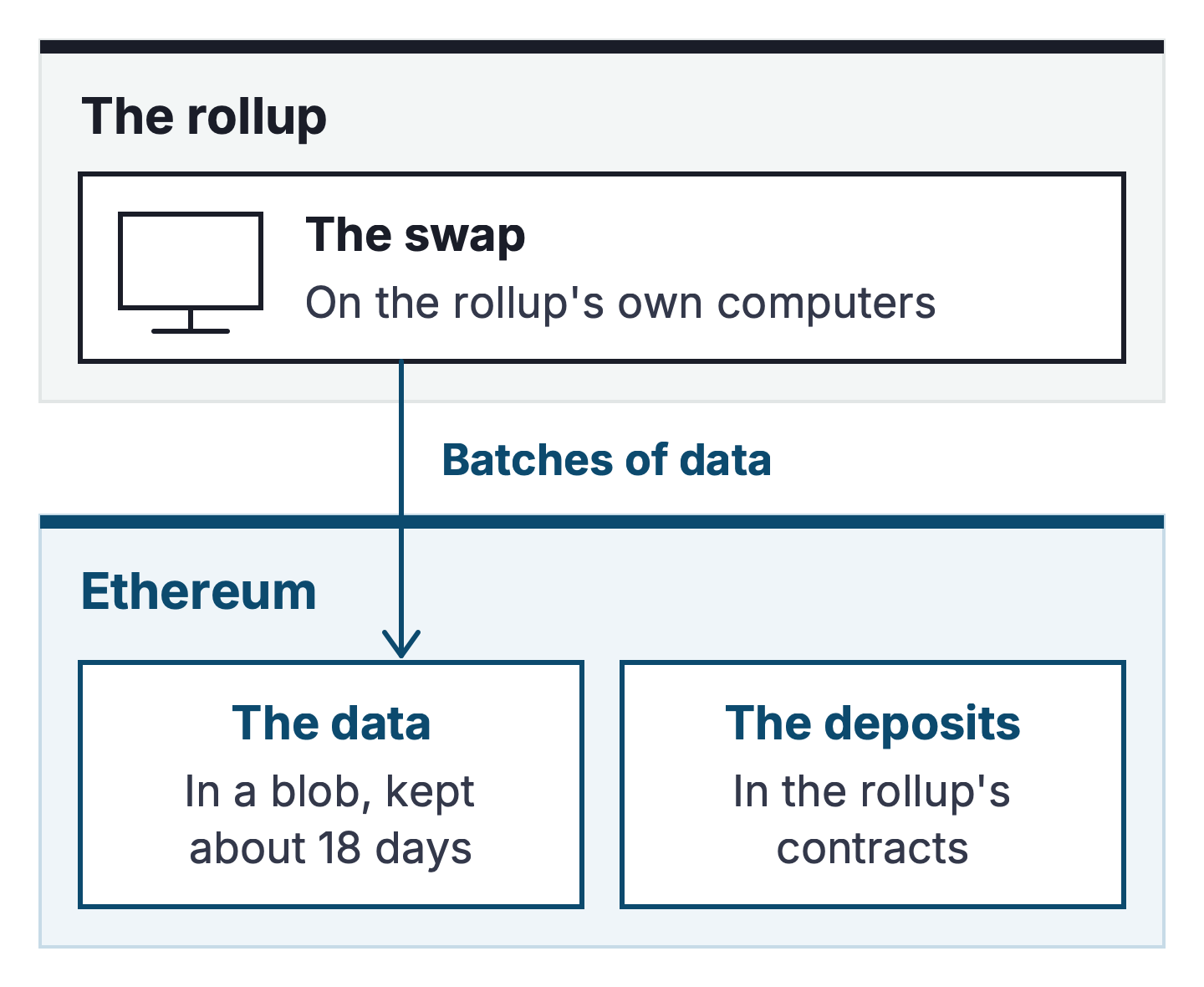
Where one layer 2 swap lives: the work happens on the rollup, and the data and the deposits sit on Ethereum.
Continue with The Crossover Pro
The rest of this story, plus two paid editions a week. $24.99 a month, or $249 a year. Already a member? Sign in above.
Subscribe to Pro