Synthetic dollars, and how to read any yield
Lesson 5 of 5
By the end of this lesson you’ll be able to explain where a synthetic dollar’s yield comes from and what turns it negative. You’ll know what EU and US law say about stablecoin interest, and you’ll have seven questions to run on any yield.

How a hedge makes a dollar
A synthetic dollar in its pure form holds crypto, not cash, and keeps its dollar value with a hedge. For every dollar of ether or bitcoin it holds, it sells the same amount short on a derivatives exchange. If the coin falls, the short gains the same amount, and the two together stay worth a dollar.
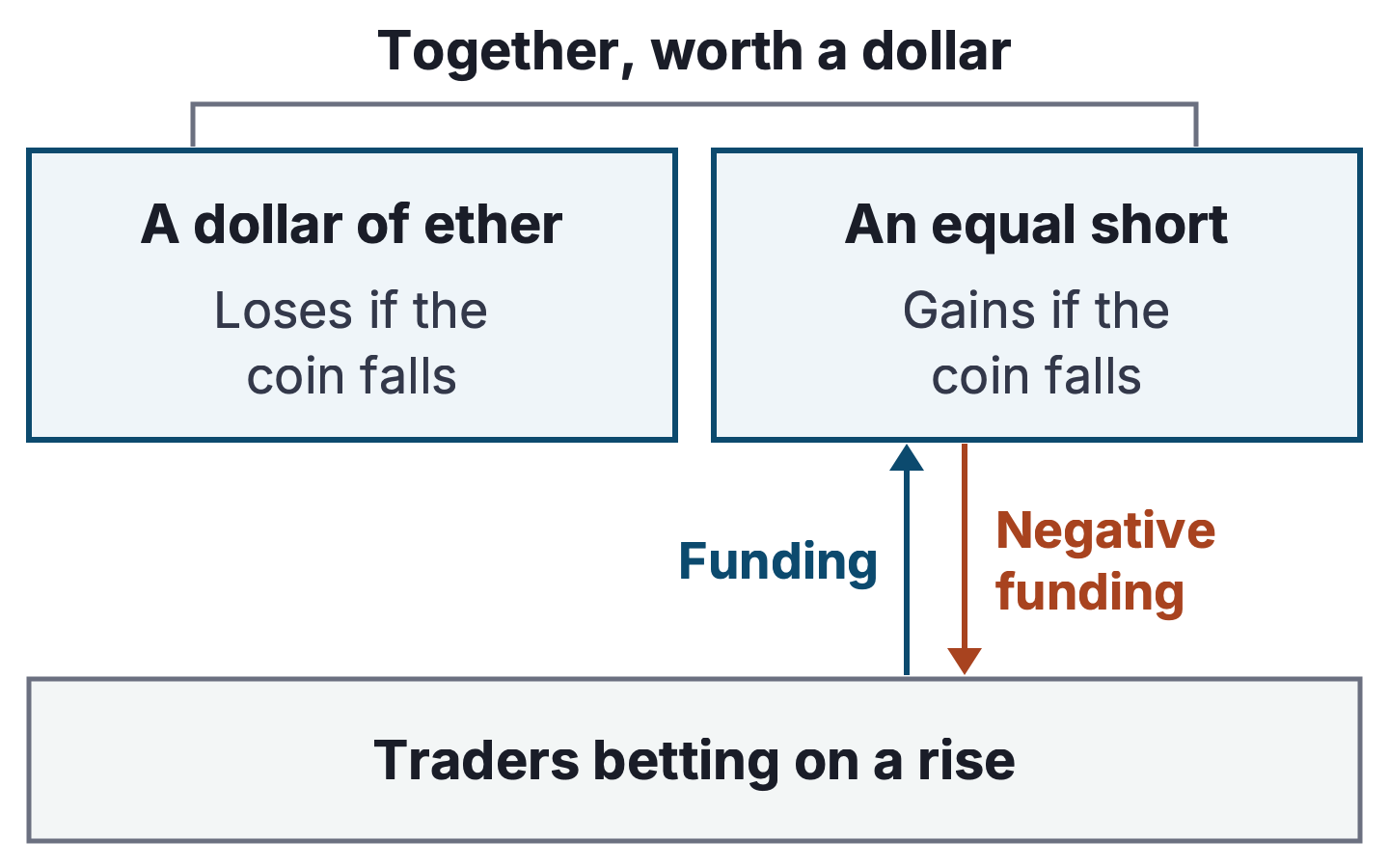
Funding, a payment between the short and traders betting on a rise, can run either way.
Continue with The Crossover Pro
The rest of this story, plus two paid editions a week. $24.99 a month, or $249 a year. Already a member? Sign in above.
Subscribe to Pro