This website uses cookies

Read our Privacy policy and Terms of use for more information.

How a blockchain works, in plain terms

Lesson 2 of 5
By the end of this lesson you’ll be able to explain what a block is, why a payment needs confirmations, and the difference between proof of work and proof of stake, without a diagram.
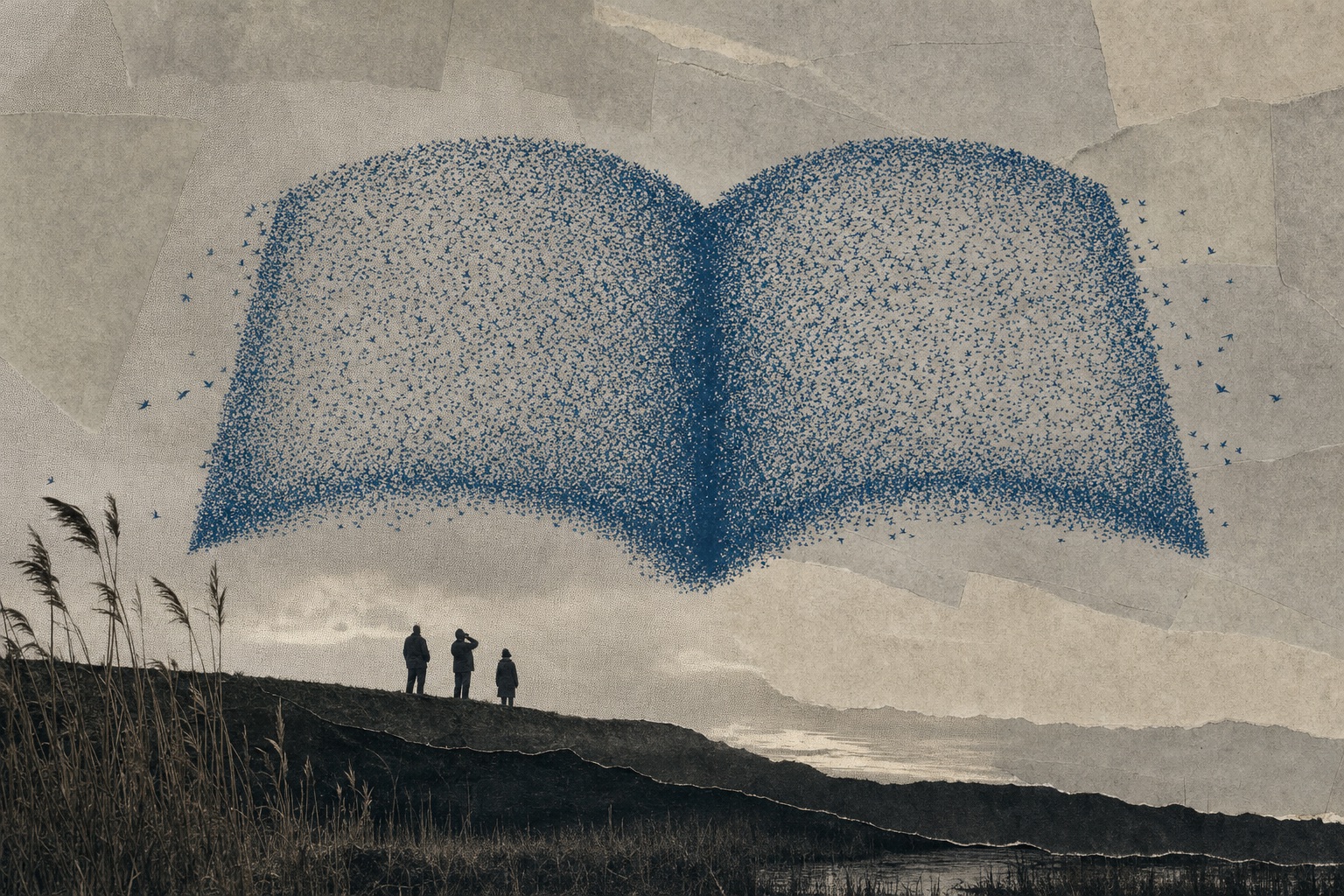
A collage of a vast flock of blue starlings holding the shape of an open book in the evening sky, with three small figures watching from a marsh below.

One record, thousands of copies

A blockchain is a ledger, which is an old word for a book of payments. The difference from a bank’s ledger is who holds it.

Thousands of computers, called nodes, each keep a full copy, and each checks every new payment against the rules before accepting it. A payment that spends coins the sender doesn’t have is thrown out by every node that sees it.

Payments aren’t added one at a time. They’re gathered into batches called blocks. On Bitcoin a new block arrives about every ten minutes on average; some come in a minute, some take half an hour.

Each block carries a fingerprint of the block before it. Bitcoin’s developer documentation puts it plainly: each block “stores the hash of the previous block’s header, chaining the blocks together.”

A hash is a fingerprint of data: change one character in the block and the fingerprint changes completely, which breaks the next link. That’s the chain in blockchain, and it’s why the record is hard to tamper with.
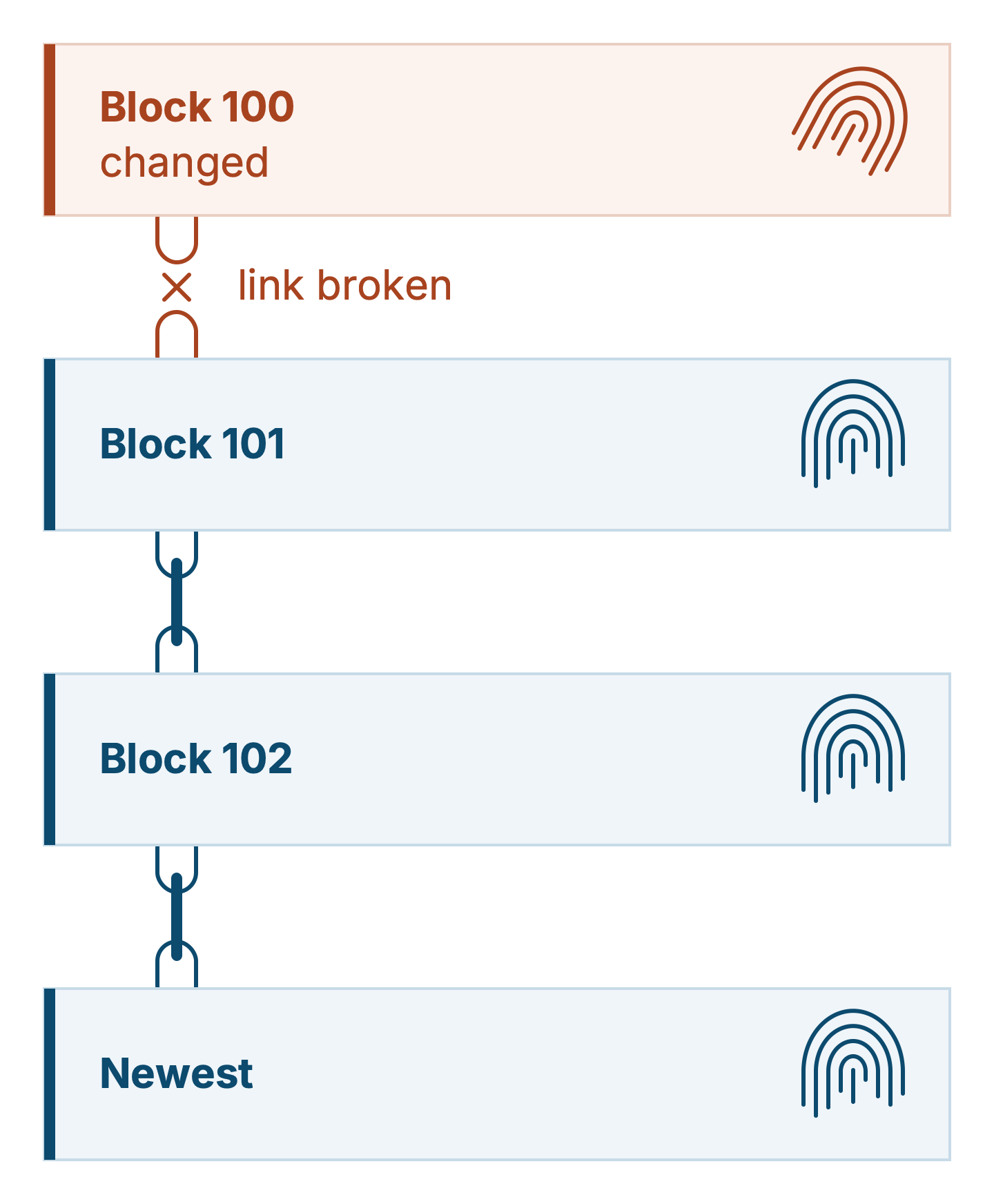
Four blocks in a chain. Block 100 is changed, so its link to block 101 no longer matches. The later links still hold until block 101 is changed too.
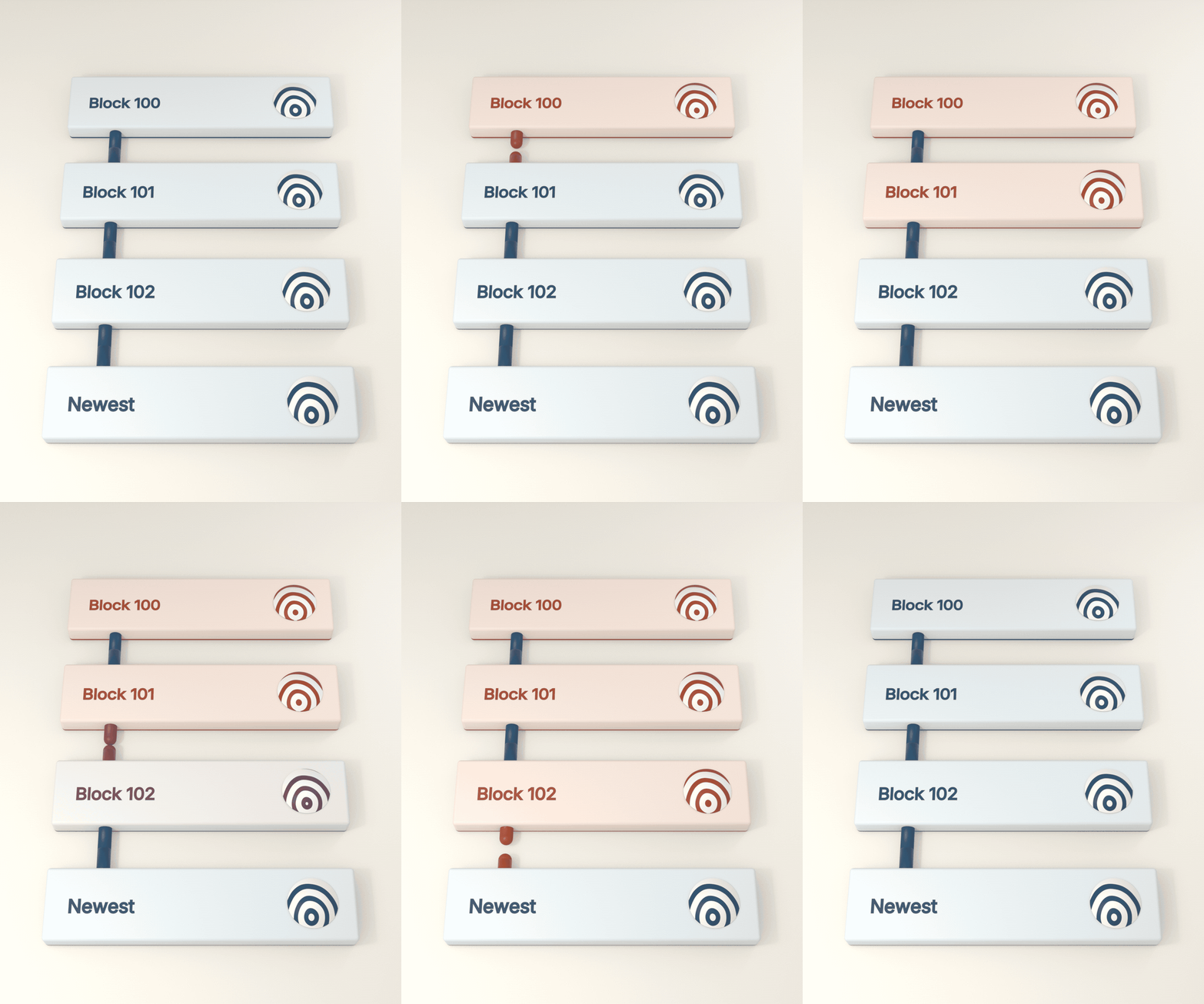
Change block 100 and block 101 no longer matches it. Repair block 101 and its own fingerprint changes, which breaks the link to block 102, and so on up to the newest block.
Four blocks in a chain, moving. Block 100 is changed and its link to block 101 comes apart. Block 101 is repaired, which mends that link but breaks the one to block 102, and so on up the chain.

Subscribe to keep reading

This content is free, but you must be subscribed to The Crossover to continue reading.

I consent to receive newsletters via email. Sign up Terms of service.

Already a subscriber?Sign in.Not now